
Meet the ecosystem drivers: new arrivals at Harold’s Park Wildland
Photography: Jonathan Perugia for Nattergal
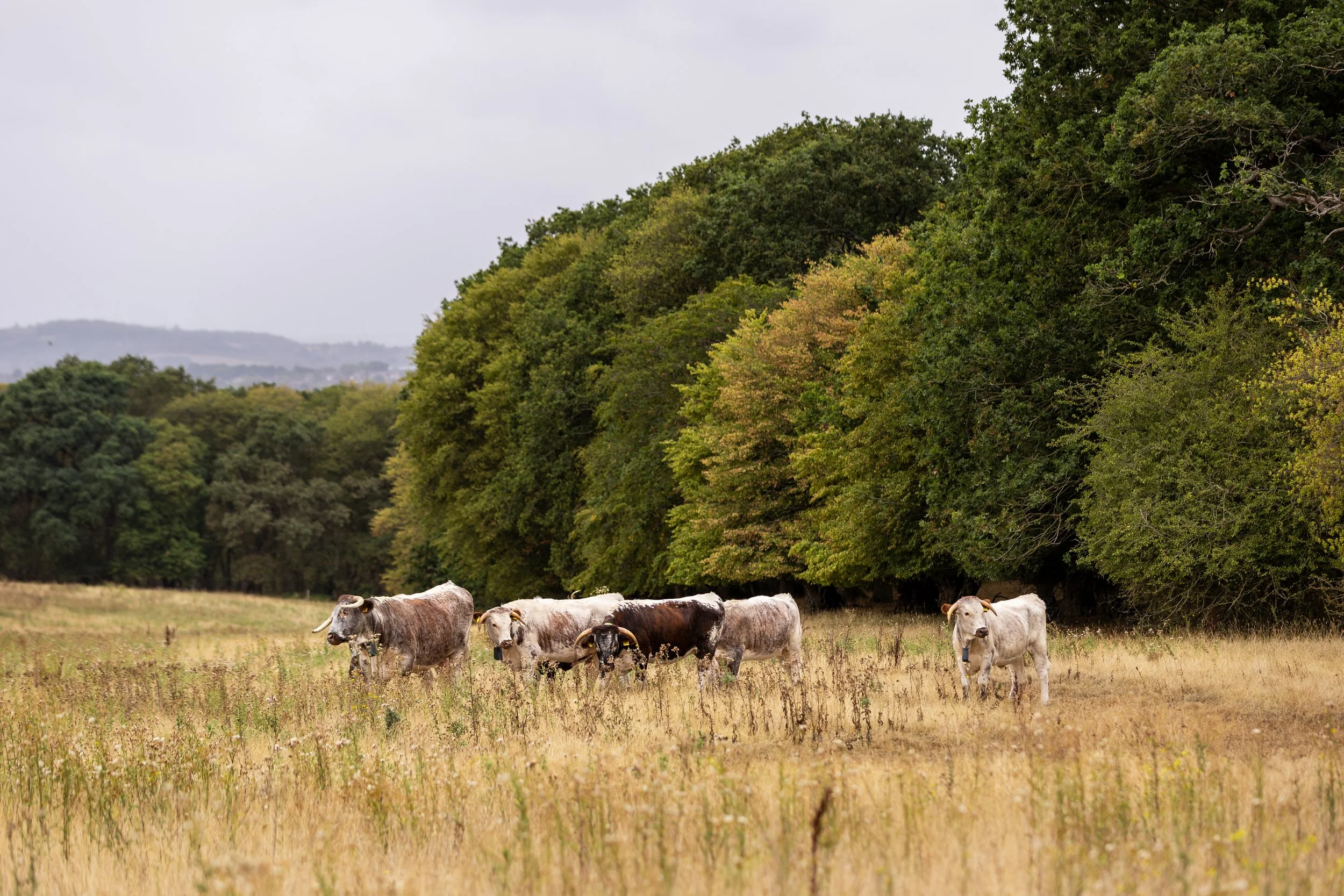
We’ve recently welcomed some important new arrivals to Harold’s Park Wildland: English Longhorn cattle and Tamworth pigs. But they’re here to do much more than graze.
These large herbivores are our ecosystem drivers, helping to shape the landscape through their natural behaviours and supporting our ambition to restore a healthy, dynamic and resilient ecosystem at Harold’s Park.
Our English Longhorns have joined us through an exciting collaboration with Epping Forest, who have loaned the cattle to Harold’s Park Wildland. Having already seen the positive impact these cattle can have at Epping Forest, the collaboration gives us an opportunity to replicate those impacts at our site and act as a stepping stone for a resident herd in the years to come.
Letting animals do what comes naturally
Large herbivores once played an important role in shaping landscapes across Britain. Today, we can use domestic animals as proxies for some of those lost wild herbivores, allowing natural processes to return to the landscape.
Our English Longhorn cattle perform a similar ecological role to the extinct aurochs, the wild ancestors of modern cattle, while pigs can replicate some of the disturbance once created by wild boar.
Importantly, much of this work happens through instinctive behaviour.
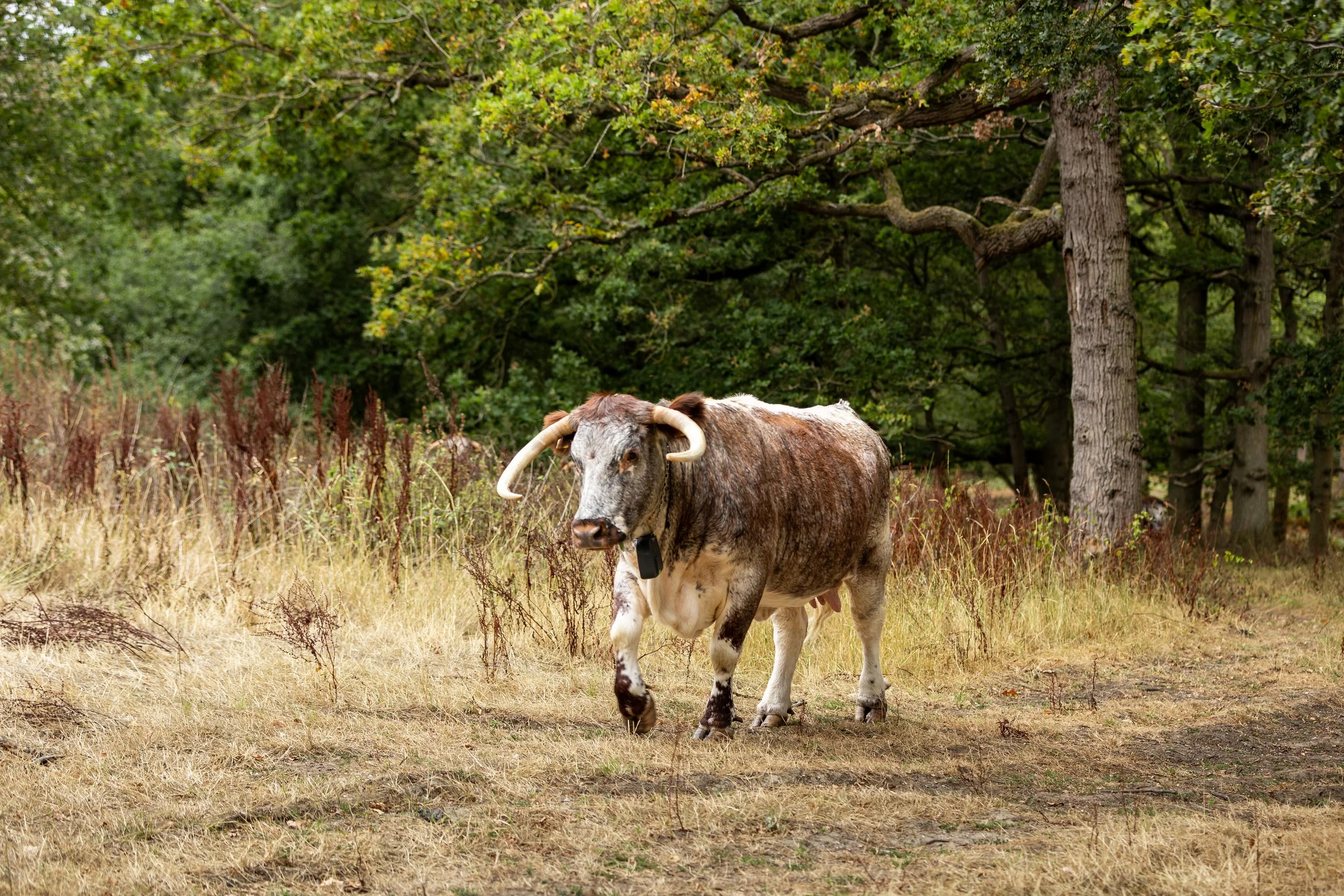
Cattle are both grazers and browsers. As they move around Harold’s Park, they graze grasses at ground level while also browsing woody and scrubby vegetation. This helps break up dense vegetation and keeps some areas relatively open, while allowing scrub, grassland and other habitats to develop elsewhere.
As they roam, the cattle also transport seeds on their hooves and fur, while their dung helps cycle nutrients around the Wildland. Dung provides an important resource for invertebrates and returns valuable nutrients to the soil, supporting the wider ecosystem from the ground up.
The important role of pigs
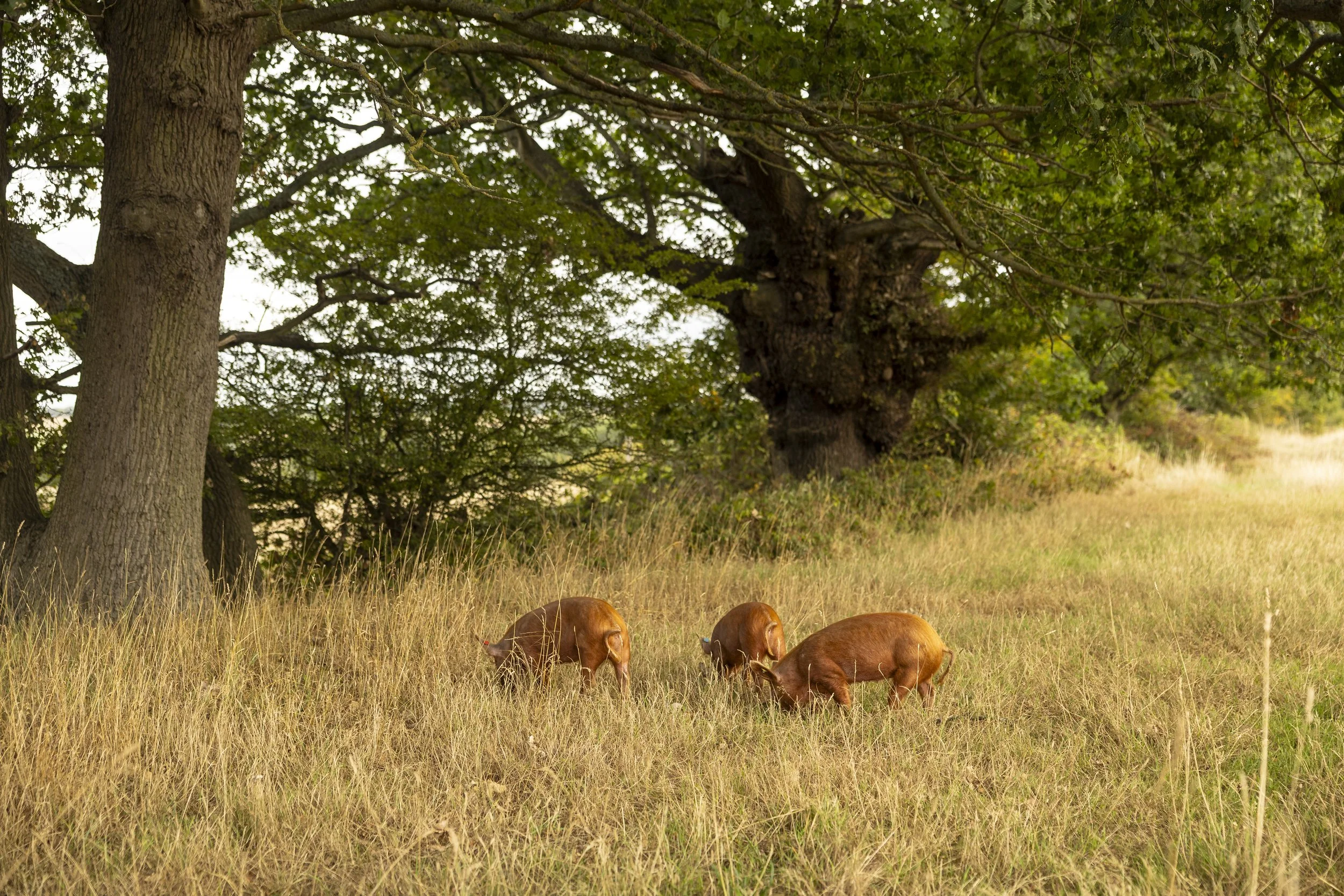
Our pigs bring a different set of behaviours to the Wildland.
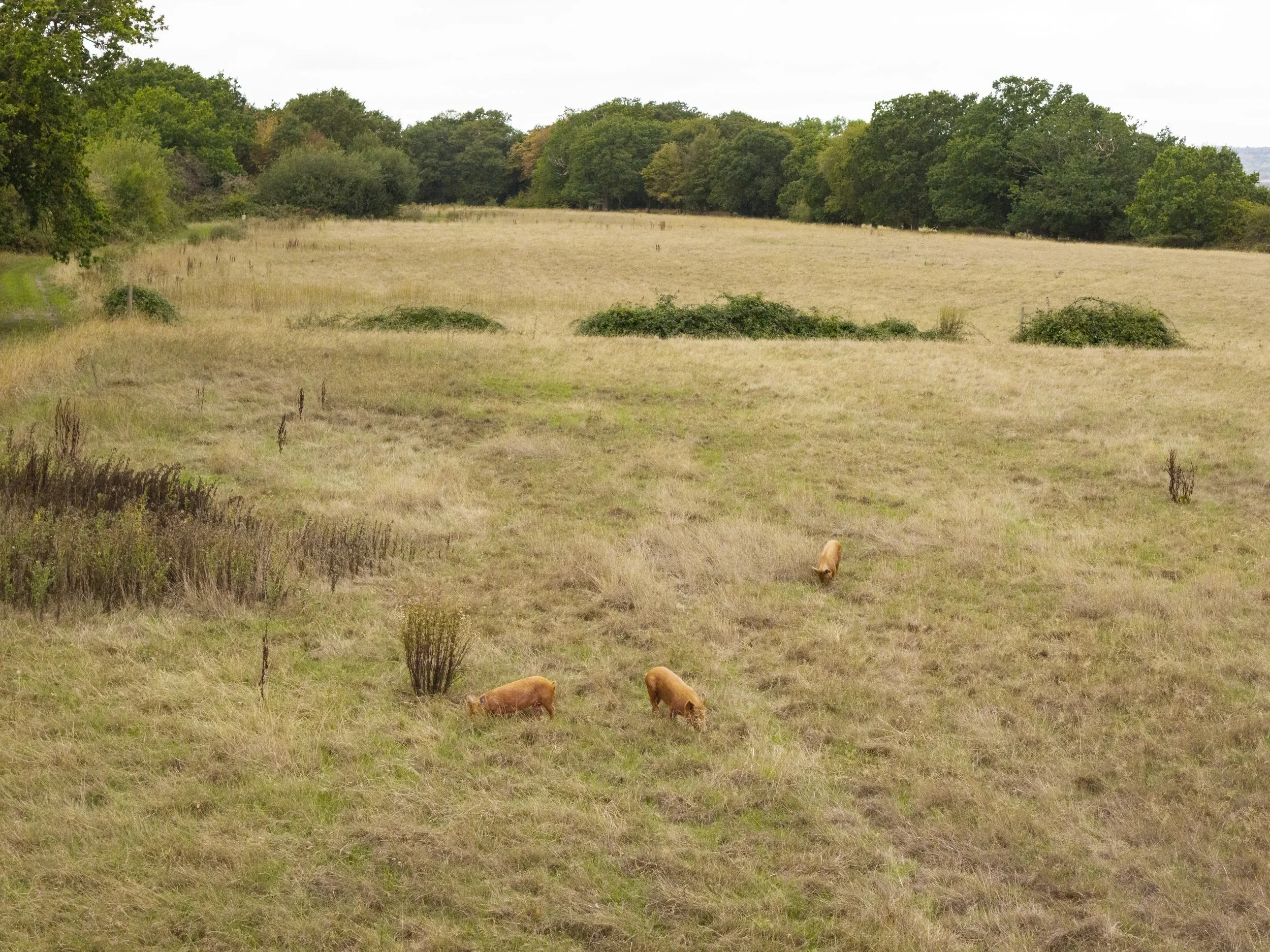
As they forage, pigs rootle through vegetation and soil, breaking up dense ground cover and creating patches of disturbance. This can help aerate the soil, expose areas of bare ground where seeds can germinate and create a greater variety of microhabitats for plants, invertebrates and other wildlife.
Combined with the grazing, browsing, trampling, seed dispersal and nutrient cycling of the cattle, these behaviours create a much more dynamic landscape.
The aim is to restore the natural processes that allow Nature to shape the landscape for itself.
Why large herbivores matter for Nature recovery
Nature restoration at Harold’s Park relies on the return of these natural processes, and herbivores are an important part of that.
Without them, change would still happen, but not necessarily as quickly or with the same level of complexity and resilience.
Rather than people constantly determining which areas of vegetation should be cut, cleared or disturbed, the animals help make those interventions naturally. They graze and browse selectively, create tracks and disturbed areas, carry seeds and return nutrients to the soil.
Because these behaviours vary across the landscape and throughout the seasons, they create something that is difficult to replicate through conventional land management: complexity.
As proxies for the free-roaming wild herbivores that would have shaped these landscapes centuries ago, our cattle and pigs are helping to return some of those missing ecological functions. Cattle fulfil aspects of the role once played by aurochs, while pigs mimic the rooting and disturbance associated with wild boar.
Together, they can help accelerate the movement and regeneration of seeds across the site, improve nutrient cycling and contribute to developing healthier, more varied soils and habitats.
Creating resilient landscapes
This is why we’re bringing herbivores back into the landscape at Harold’s Park Wildland: to restore the natural processes that help ecosystems become more diverse, dynamic and resilient. From grazing and browsing to rooting, seed dispersal and nutrient cycling, each intervention is helping us create the conditions for Nature to recover, with lasting benefits for biodiversity, climate and people.
If you’d like to see Nature restoration in action, you can visit our Wildlands through our guided tours and team away-days and experience these changing landscapes for yourself.
Note: When visiting, please help us give our animals and wildlife the space they need by sticking to designated footpaths and keeping dogs on leads.