
England’s Nature markets on track to deliver a fifth Government’s 2042 biodiversity target
Nattergal’s latest research shows offsite Biodiversity Net Gain (BNG) could protect over 80,000 hectares of natural habitat by 2042, delivering nearly a fifth of England’s legally binding biodiversity target at no cost to the taxpayer.
The offsite BNG market has expanded from one 32-hectare site to 215 sites across 7,410 hectares in under two years.
This research comes as England is significantly off track to meet its biodiversity commitments, with just 2.8% of land currently effectively protected for Nature.
London, May, 2026: England's nature markets are on track to deliver nearly a fifth of the Government's legally binding biodiversity targets at no cost to the taxpayer, according to new research by Nattergal.
Based on the current pace of nature delivery, the analysis shows that England's offsite Biodiversity Net Gain (BNG) market could protect over 80,000 hectares of natural habitat by 2042, the equivalent of 125,000 football pitches or an area the size of Greater London.
This would represent nearly a fifth of the Government's legally binding commitment to restore or create 500,000 hectares of wildlife-rich habitat across England by 2042. Crucially, this would be delivered through the offsite BNG market alone and at no cost to the Government or taxpayer.
BNG rules require all new developments in England to deliver at least a 10% uplift in nature compared to when the project started. Where this cannot be achieved directly on site, developers can purchase habitat units from providers like Nattergal, who restore habitats elsewhere in England — what is called offsite BNG. The offsite BNG market is entirely self-sustaining, funded by developer demand and not public money.
This comes as England is significantly off track to meet its biodiversity commitments, with just 2.8% of land currently effectively protected for Nature (link). The Government must rely on private sector funding to achieve its goals and research shows the offsite BNG market is one of the few policy mechanisms actively closing this gap at scale.
This follows the Government rolling back on its BNG commitment in December last year, exempting sites smaller than 0.2 hectares from the policy — removing around half of all residential planning applications from its scope. Despite this rollback, the market has continued to innovate, with Nattergal’s analysis showing offsite BNG has expanded from a single site covering just 32 hectares in February 2024, to 215 sites encompassing 7,410 hectares by January 2026.
Beyond protecting Nature, the growth of England’s nature markets is also generating wider economic and social benefits — supporting green jobs, improving water quality and increasing public access to nature. Industry analysis suggests England’s Biodiversity Net Gain market could be worth almost £3bn by 2035 (link).
The potential of England’s nature markets is set to increase further as the industry awaits the rollout of BNG obligations for Nationally Significant Infrastructure Projects in November. Research shows BNG for major infrastructure developments could unlock more than £430m in benefits over 10 years, including healthier and more resilient communities through reduced flood risk and improved air quality (link).
This is especially the case with providers such as Nattergal, who are delivering nature recovery at landscape scale, going beyond the minimum requirements of BNG to provide wider public benefi ts including river restoration, flood alleviation, water storage, volunteering opportunities and youth engagement.
Archie Struthers, CEO of Nattergal, said: “Two years ago, this market did not exist. Today, it is restoring the equivalent of the Lake District in natural habitat — without a penny of public money. The evidence is clear that BNG is playing a critical role in delivering one of the most important environmental commitments the UK Government has ever made. The expansion of BNG to cover large infrastructure projects from November will help amplify benefi ts for communities across the country and secure England’s green recovery for the long term.”
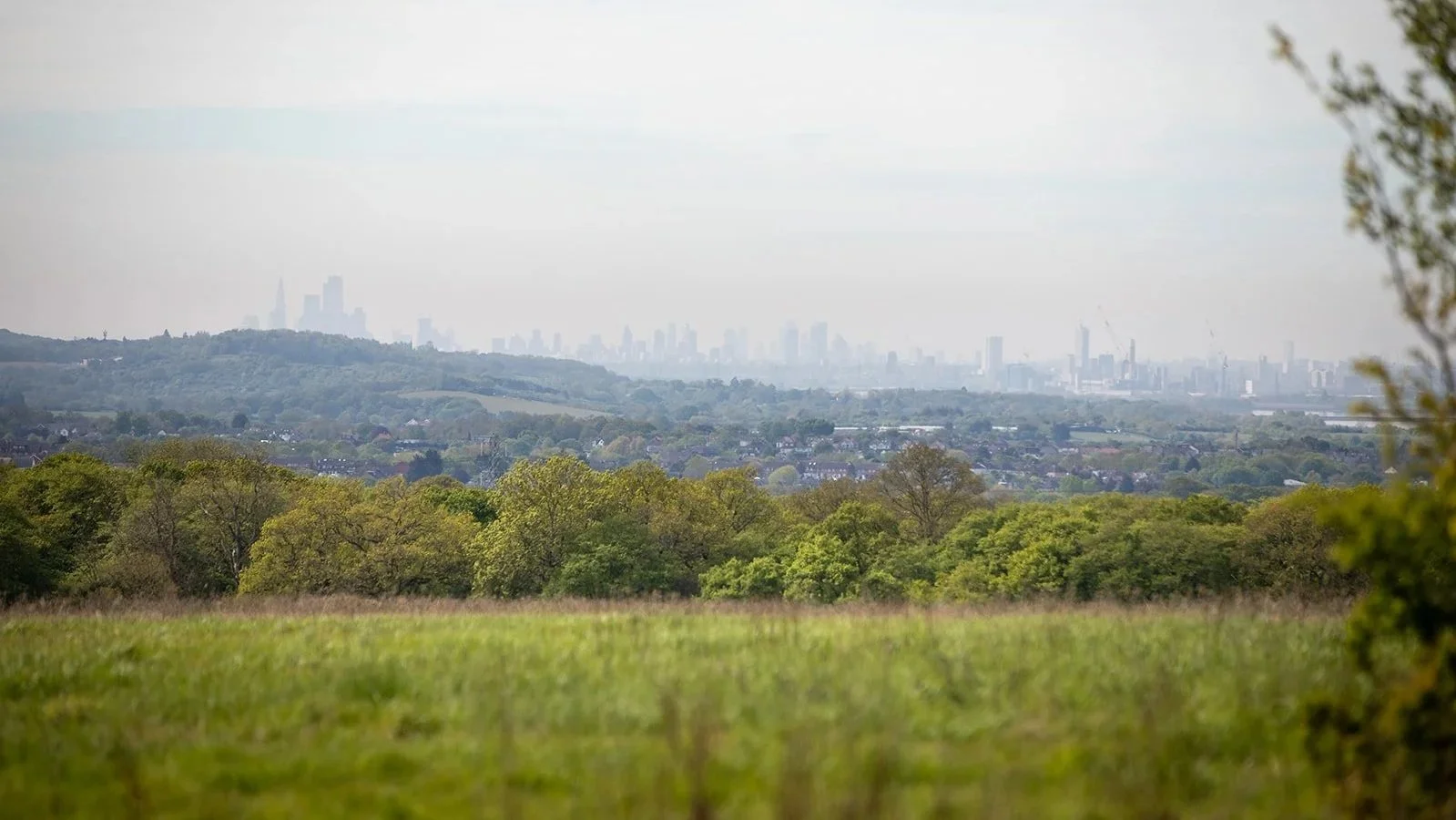
Nattergal’s Harold’s Park Wildland on London’s edge.