
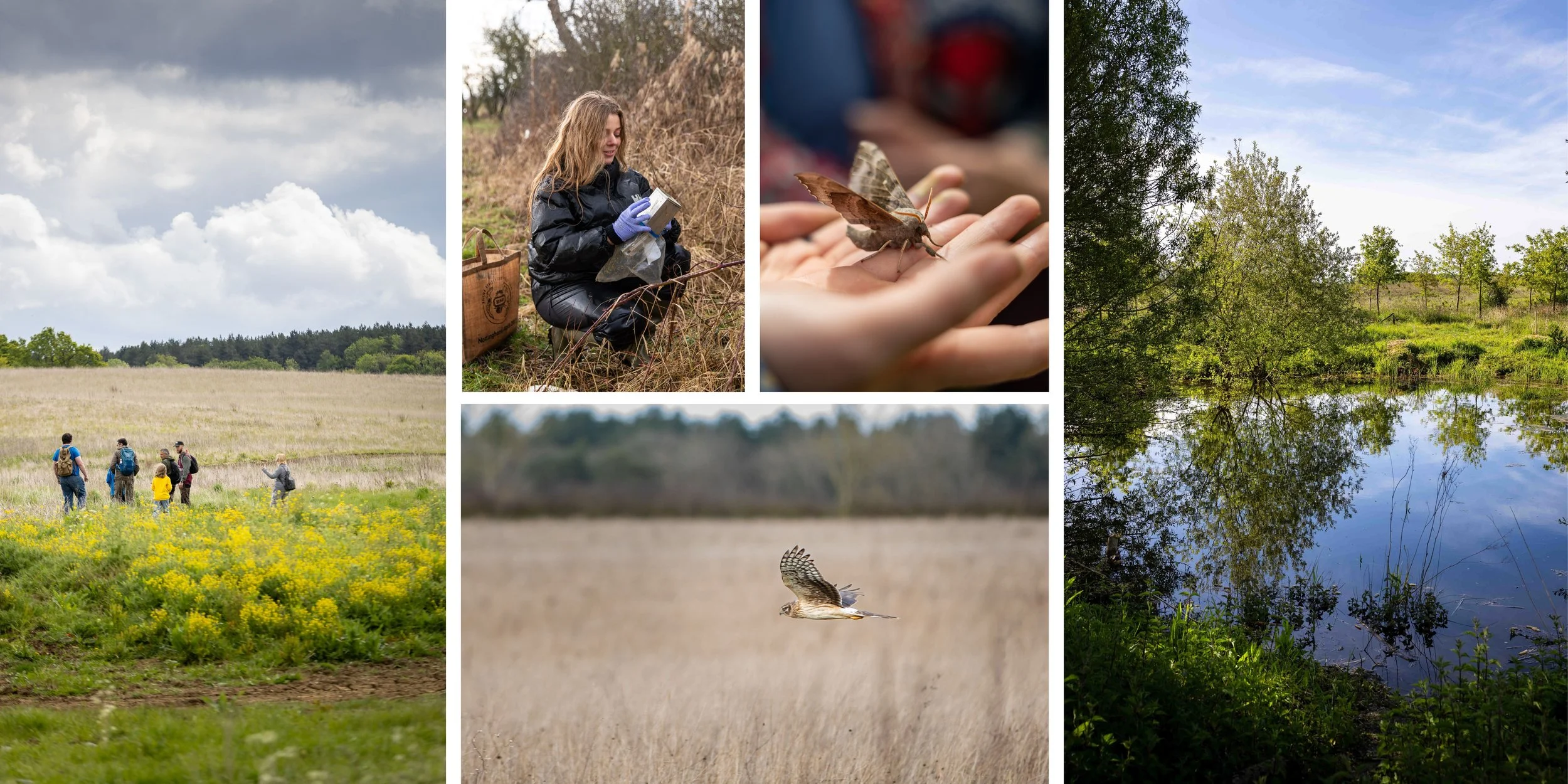
Boothby Wildland by Jonathan Perugia
Nature more than doubles at Nattergal's Lincolnshire restoration site as rare wildlife, including endangered birds and beavers, increases
● Biodiversity at Nattergal’s Boothby Wildland has increased by 108% since 2023, with species including the grey partridge and skylark seeing signs of recovery
● The site is on track to absorb and store over 138,000 tonnes of carbon over 50 years, and early monitoring shows river restoration is helping reduce local flooding
● Nattergal’s Boothby Wildland demonstrates how public and private finance can be combined to deliver Nature recovery at scale, having been the first project to receive implementation funding under the Government's Landscape Recovery scheme
London, June 11, 2026: New data released today by Nature restoration specialists Nattergal shows biodiversity has more than doubled at its Boothby Wildland site in Lincolnshire, England's first ‘Landscape Recovery’ project to receive implementation funding from the Government, demonstrating how public and private finance can deliver measurable Nature recovery at scale.
The 617-hectare site has recorded a 108% increase in biodiversity, alongside notable gains for species including the endangered grey partridge and skylark. Species richness observed during the site's core monitoring has increased by a third, with 152 varieties of birds, bats, bees, butterflies and plants identified.
Formerly intensively farmed arable land with limited ecological value, Boothby was acquired by Nattergal in December 2021 and has since transitioned to a Nature-led landscape of grassland, wetland, woodland and scrub habitats.
The project is funded through a combination of public and private investment. In 2025, it became England’s first Nature recovery project to receive implementation funding under the Government's Landscape Recovery programme. Alongside this public funding, Boothby generates revenue through natural capital markets, which allow businesses to invest in Nature’s recovery. These include Biodiversity Net Gain (BNG) units, which are purchased by developers to meet mandatory biodiversity requirements and fund habitat restoration, as well as high-integrity Nature-based carbon credits.
The results come from Nattergal’s comprehensive ecological and ecosystem service monitoring program, running alongside third-party verification, across which 1.86 million species observations were made.
Alongside Nature recovery, the site will generate significant climate benefits, including absorbing and storing an estimated 138,000 tonnes of carbon by 2076 — the equivalent of more than 80,000 return passenger flights between London and New York out of the atmosphere entirely.
Boothby provides a real-world example of how Nature restoration can generate measurable environmental outcomes while creating investable natural capital assets, including BNG units, biodiversity credits and carbon credits.
Archie Struthers, CEO of Nattergal, said: “Boothby Wildland shows what’s possible when we give Nature the space and time to recover. In just a few years, we've seen biodiversity more than double, the return of species that had disappeared from the landscape, and real benefits for local communities through improved flood resilience, public access and new opportunities to engage with Nature. What's particularly exciting is that these outcomes are being delivered through a model that combines public support, private investment and rigorous ecological monitoring. As pressure grows on the environment, Boothby demonstrates that large-scale Nature recovery can deliver measurable biological impact while creating long-term value for society.”
Nature recovery and species restoration
The strongest biodiversity gains have been recorded among grassland species. Grey partridge, quail and meadow pipit observations have all increased substantially, suggesting recovering habitats are already benefiting species that continue to decline nationally.
Earlier this year, a family of four beavers was released into the restored West Glen river system. As ecosystem engineers, they are expected to accelerate habitat creation, improve hydrological function and support biodiversity gains across the site over the coming decades. Other species, including otters and polecats, have also been observed on the site.
Natural capital
Alongside ecological recovery, Boothby is generating measurable natural capital products.
Over the next 50 years, the recovering landscape is expected to sequester approximately 138,000 tonnes of carbon (CO2e), with around 52,000 carbon credits forecast to be verified under recognised Nature-based carbon standards.
The project has also added 1,413 BNG units to the national register and secured 2,976 independently verified biodiversity credits, helping direct private investment into long-term habitat restoration.
Significant hydrological improvements have also been recorded. Restoration of 2.1 kilometres of the West Glen River, combined with pond creation, drainage reversal and leaky dam installation, has created more than 4,000 cubic metres of additional water storage capacity. Early monitoring indicates peak flood flows have already reduced by 3.4% following restoration works, providing an early indication of the wider ecosystem service benefits generated by landscape recovery.
Community benefits
Nature recovery at Boothby is also creating significant benefits for local communities. More than 700 people have participated in community events, including guided walks, with volunteers contributing over 3,300 hours to conservation activities ranging from habitat creation and tree planting to beaver monitoring and seed collection.
The project has nearly tripled the number of full-time jobs on the land compared to when it was managed as a traditional farm and is expanding opportunities for public access, education and engagement with Nature.
Nattergal’s wider portfolio includes Boothby Wildland in Lincolnshire, Harold’s Park Wildland in Essex and High Fen Wildland in Norfolk, together spanning more than 1,000 hectares of restoration projects across a range of habitats and geographies.
Together, the sites demonstrate how Nature recovery can be financed, measured and delivered at scale across the UK.
View the report in full here