
The water benefits of peatland restoration
by Matthew Hay, Natural Capital Manager
We still live in a world that sees the management of land for Nature as unproductive. Productive land uses, I am constantly told, are those that grow food and fibre or generate energy, the implication being that all the rest are luxuries we indulge in. Needless to say, I disagree.
I disagree with the instrumentalist framing: that land is only useful if it is producing something our economies can physically consume. But more profoundly, I dispute that other land uses are not productive. They are, it is just that the value of the things they produce is not recognised.
At High Fen, we have just concluded the final phase of a multi-year rewetting project that has seen the water table lifted across 150 hectares, roughly a half of the Wildland. This single intervention is projected to reduce greenhouse gas (GHG) emissions from the site by over 100,000 tCO2e over the next 45 years and deliver a biodiversity uplift worth hundreds of BNG habitat units. These are the saleable outputs Nature recovery is generating.
But managing High Fen for Nature recovery will deliver so much more than just these two monetisable products. Chief amongst these other benefits is water.
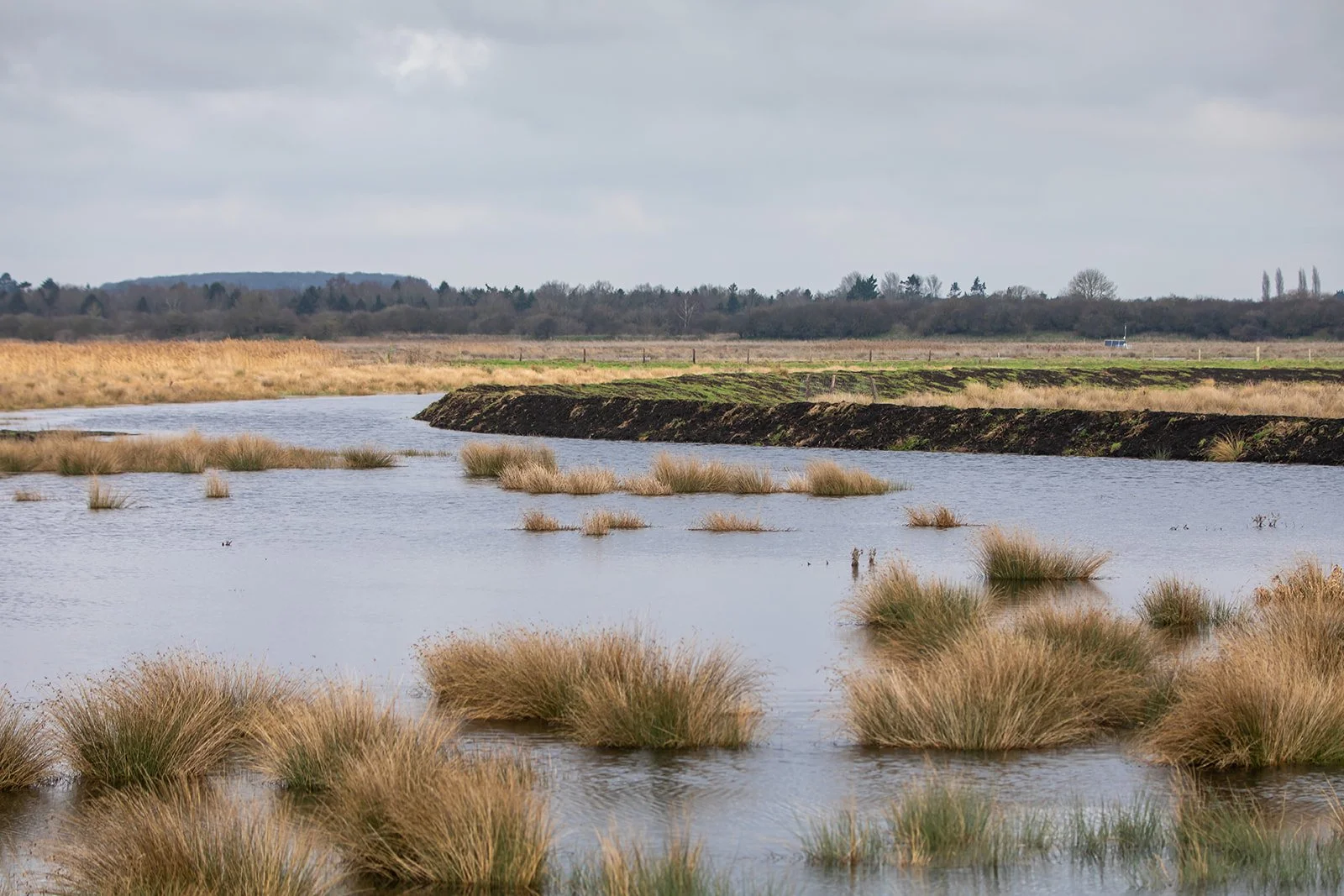
One of the bunds at High Fen that is helping to lift the water table and rewet the site.
Surprisingly for a region that was once mostly wetland, the Fens is situated in one of the driest parts of England, with an average annual rainfall of only 700 mm. So although in winter it is a challenge to discharge all the water flowing into the Fens into the North Sea, in the summer water scarcity is a real issue, and a problem being exacerbated by the hotter, drier summers of our changing climate.
This lack of water is becoming so acute now that landowners and water companies alike are creating reservoirs to try to buffer the extremes of water availability and make their businesses more resilient. The region’s vast meres that were drained in the name of productivity are now, at great expense, being reconstructed to maintain that productivity.
But Nature-rich wetlands can also help to buffer these extremes, and our peatland restoration project was very much designed with the wider region’s hydrological challenges in mind. For example, High Fen abstracts over 80 per cent of its annual water need in the winter months, taking the excess flow out of surrounding watercourses when it would otherwise be pumped out to sea, enabling us to leave more for other users at drier times of the year.
However, most of the water benefits High Fen delivers happen once the water is actually on our site. These were the benefits we wanted to quantify.
To do this, we teamed up with the Rivers Trust’s Replenish team, who use a proprietary toolkit to estimate the “volumetric water benefits” (VWBs) projects like ours deliver.
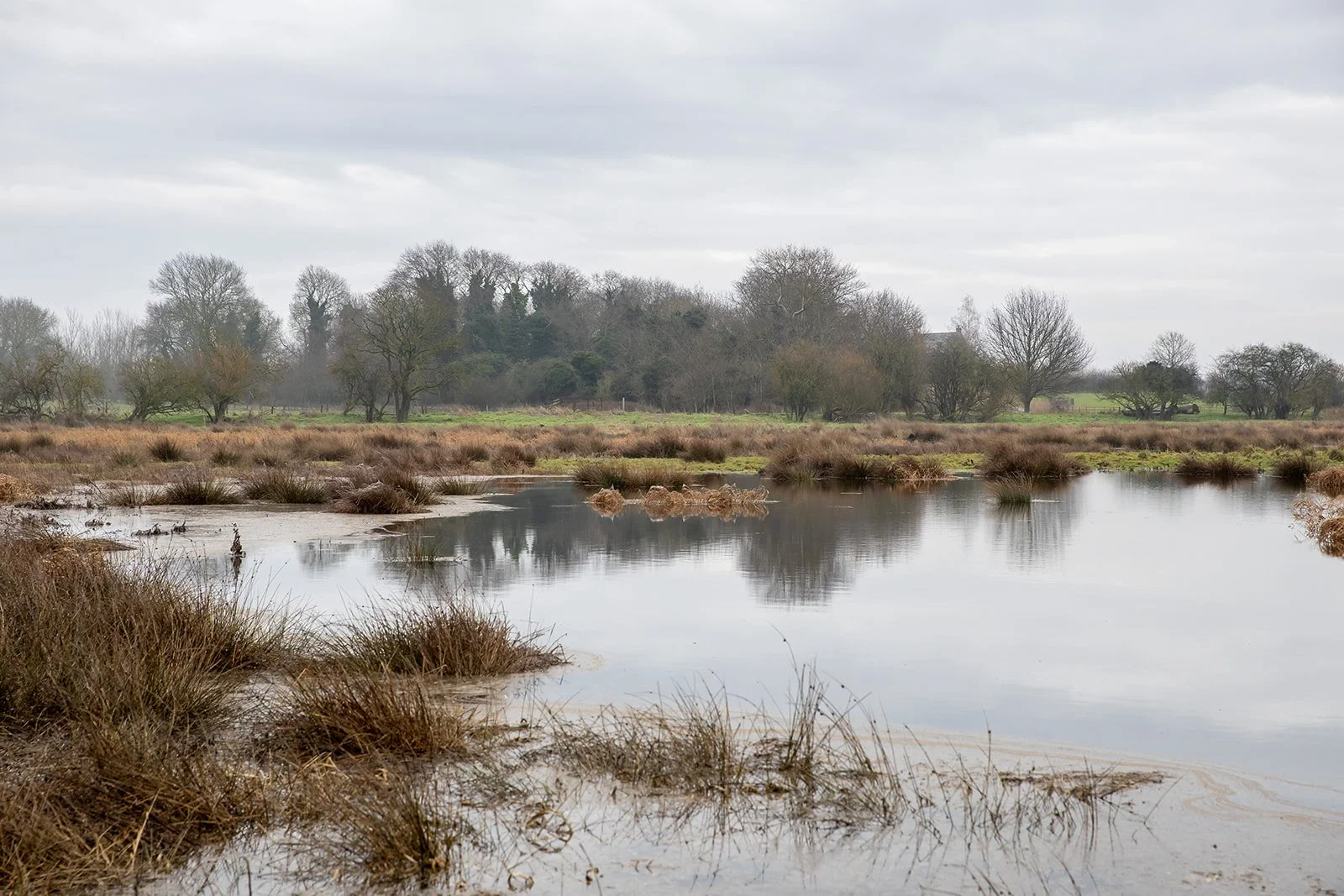
Rewetted fen at High Fen Wildland helping to recharge the chalk aquifer that sits below the site’s peatlands.
VWBs are “the volume of water resulting from water stewardship activities, relative to a unit of time, that modify the hydrology in a beneficial way and/or contribute towards reducing shared water challenges.” That is a wordy way of saying the cubic metres of water that is doing good stuff, like being stored, cleaned, contributing to flood mitigation or groundwater recharge.
It has been an interesting process, seeing how the Rivers Trust approach the quantification of water benefits and, if I am honest, the outputs did not immediately resonate with me because… well… what exactly does half a million cubic metres of water mean? So I converted each benefit into Olympic swimming pool equivalents, which helped the magnitude of what High Fen is delivering to really hit home.
In total the site now uses more than 220 Olympic swimming pools’ worth of water every year to re-saturate over 2 million m³ of degraded peat. The vast majority of this water then slowly percolates down into the underlying chalk bedrock, recharging groundwater into the local aquifer. This aquifer is the main source of abstraction for many of our neighbouring agricultural businesses. It also feeds the Cut-Off Channel which, in summer, takes drinking water to Essex as part of the Ely Ouse to Essex transfer scheme.
Thanks to the bunds we have installed, High Fen can now also store an additional 92 Olympic swimming pools of water. This extra storage is vital. It enables us to abstract more water in the winter and hold it for longer during hotter, drier summers. But it also enhances the site’s capacity for flood mitigation, especially in late autumn and early winter, when up to half a million cubic metres of water can be pulled from the surrounding watercourses if required.
So what is the point I am trying to make? It is that we need a new way to think about productivity. Rather than looking at every landholding in isolation and treating each one like a high-performance athlete, we need to zoom out and see the bigger picture, factoring in the catchment and regional contexts.
Maybe the best use for some land is to manage water so that farms downstream are not flooded. Or to recharge local aquifers, enabling abstraction to maintain food production in drier summers. Maybe, in places, that is the most productive land use.
In fact, when you bring together all the different things High Fen is delivering for climate, wildlife, water and economic resilience, it is hard to think of a more productive use for this precious slice of West Norfolk.
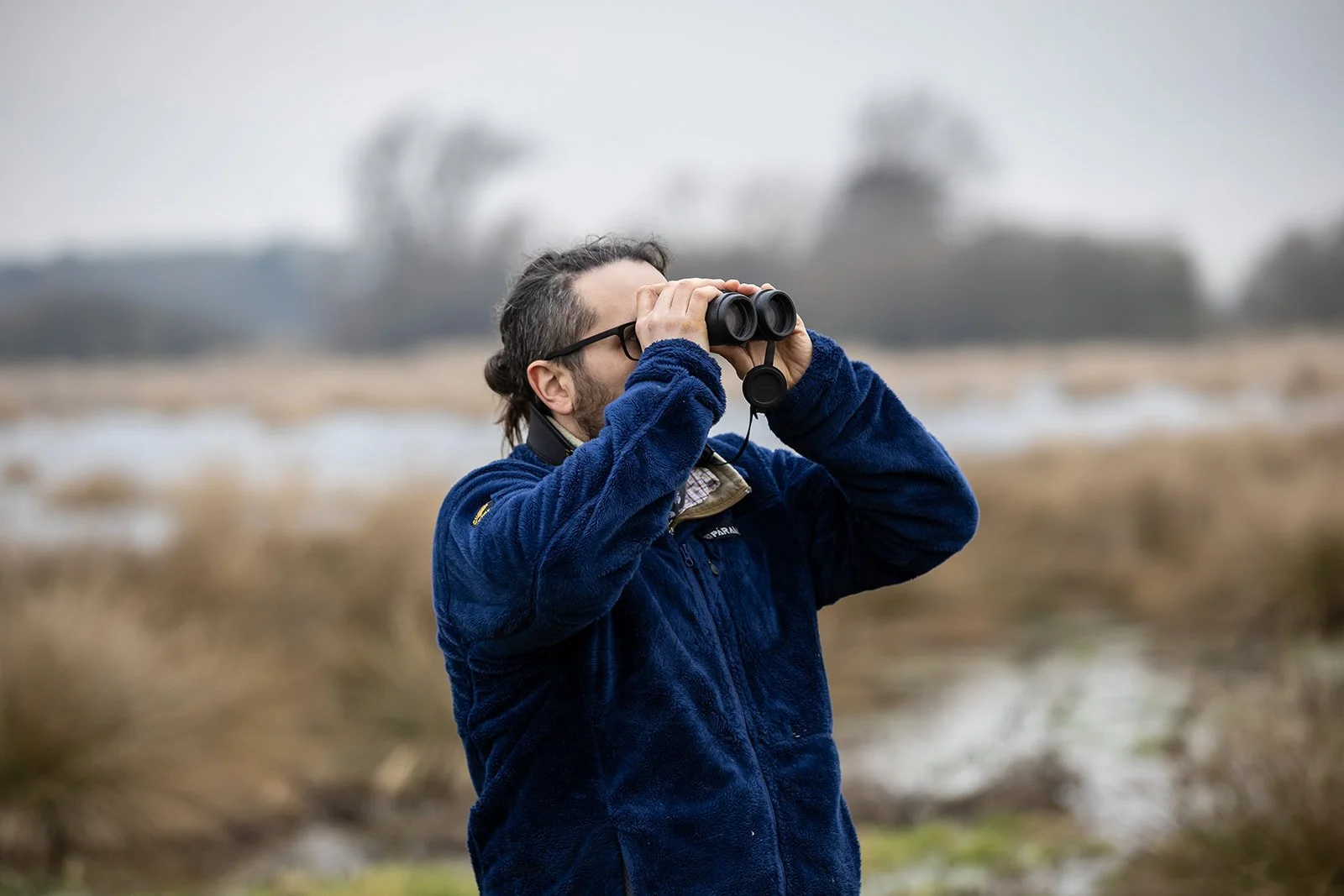
High Fen Wildland’s site manager, Frank Street, seeing the bigger picture as he looks out across the marsh.